Signs It’s Time to Migrate Your E-Commerce Platform to Magento
by Rahul Basu
February 18,2026
Your e-commerce platform shouldn’t feel like a constant hassle. It should help you grow, plain and simple. But once your product catalogue expands, traffic spikes, and customers start asking for more, the cracks start to show. Suddenly, your old system just can’t keep up. It slows you down, gets in the way, and starts eating into your profits.
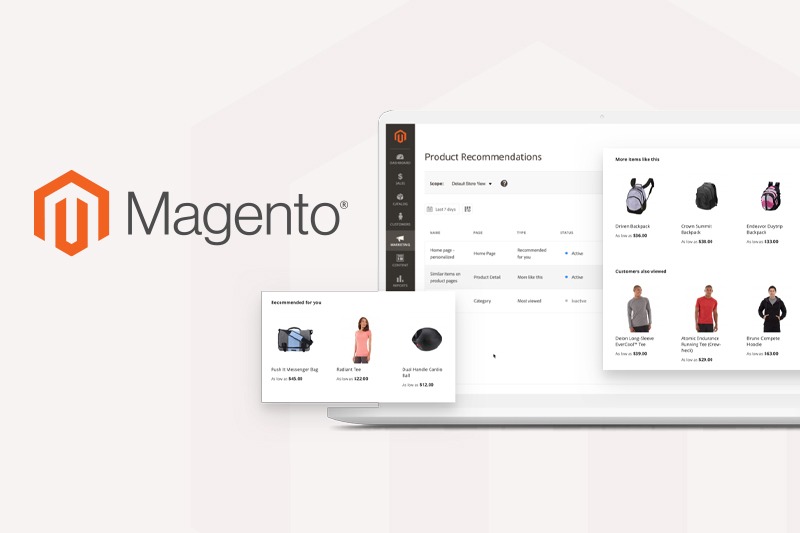
That’s where Magento steps in. Whether it’s Magento Open Source or Adobe Commerce, this platform is made for businesses that need serious customization, the freedom to run multiple stores, and integrations that actually work. You get the flexibility to scale up—without getting stuck inside boring, inflexible templates.
So, how do you know when it’s time to make the switch? Here are the most obvious signs you’ve outgrown your platform—and how a Magento agency like Ingold Solutions can help you make the move smoothly. No lost SEO, no data mess, no stalling your business. Just a clean, confident transition.
1) You’ve outgrown your current platform’s “one-size-fits-all” limitations
If your roadmap keeps running into “can’t do that” moments, your platform isn’t scaling with your business. Common symptoms:- You need complex pricing rules, advanced promotions, or customer-group logic and it becomes a plugin maze
- Your UX changes require heavy workarounds or break during updates
- You’re limited in checkout customizations, shipping logic, or product configurators
- You’re planning multi-brand, multi-country, or multi-currency expansion and the setup feels fragile
2) Your store performance is hurting conversions (and you feel it in revenue)
Speed is not a “nice-to-have.” It impacts customer behaviour and conversion rates—especially on mobile. Google/Deloitte’s “Milliseconds Make Millions” report found that even a 0.1-second improvement in site speed correlated with measurable gains in conversions (retail) and average order value. If you’re seeing:- slow category pages with filters
- lagging checkout steps
- poor Core Web Vitals
- higher mobile bounce rates than expected
3) You’re managing multiple stores, regions, or brands… and it’s getting messy
If your business operates multiple storefronts (or plans to), and you’re stuck juggling separate admin panels, duplicated catalogues, disconnected inventory, or inconsistent pricing rules—your operational overhead will keep rising. Magento’s multi-store architecture is built to manage different websites, stores, and store views from a single admin—supporting different brands, regions, and localized experiences under one installation. Signs you’re ready for Magento:- You want one backend for multiple storefronts
- You need localized catalogues, tax rules, languages, or currencies
- You require region-specific shipping methods and promotions
- You’re launching new brands or country stores and need governance
4) Inventory, fulfilment, and “in-stock accuracy” are becoming painful
When inventory is managed across multiple locations, warehouses, or fulfilment partners, many platforms struggle to keep real-time accuracy—leading to overselling, cancellations, and support overhead. Magento’s Inventory Management (MSI) supports product availability and fulfilment across one or many locations (“Sources”) and introduces concepts like salable quantity and stock at the website level. You might need Magento if:- you’re running multiple warehouses or stores
- you need smarter fulfilment logic or better “in-stock” reliability
- you’re expanding to omnichannel (online + physical locations)
- your team spends too much time reconciling stock
5) SEO and marketing execution feel constrained by the platform
At some point, growth becomes less about “posting more” and more about executing fast experiments:- landing pages
- structured navigation + filtering
- localized SEO for country stores
- scalable category strategy
- advanced tracking and attribution
- URL mapping and redirect strategy
- metadata preservation
- structured category planning
- staging environment review before launch
- post-launch monitoring plan
6) Your platform’s security posture is becoming a real business risk
This is the “silent killer” of legacy e-commerce systems. If you’re on a platform/version that no longer receives security patches, your risk profile increases significantly—and may collide with compliance requirements. The PCI Security Standards Council notes that PCI DSS requires systems to be kept up to date with vendor-supplied security patches, and addresses the risk of unsupported systems in the context of patching requirements. A particularly common case: Magento 1. Magento 1 reached end-of-support in June 2020, meaning no further official security updates. If you’re still running Magento 1 (or another unsupported platform), migration is not just an “upgrade”—it’s risk reduction. How Ingold Solutions helps: As a Magento agency in Berlin, we plan migration timelines with security in mind—prioritizing secure infrastructure, hardened configurations, and a controlled launch process that minimizes exposure.7) Backend management is slowing your team down
A platform isn’t only a storefront—it’s an operational system your team lives in. If your daily reality includes:- slow product updates
- complicated merchandising workflows
- limited role permissions
- messy order management
- manual exports and “spreadsheet operations” to do basic tasks
8) Integrations are brittle, expensive, or constantly breaking
As your business grows, integrations become non-negotiable:- ERP / accounting
- shipping providers
- PIM
- CRM
- payment gateways
- marketplaces and feed systems
- data mapping
- integration testing
- staged rollout
- fallback planning
- monitoring after launch
9) You’re planning a serious growth phase (and need a platform that won’t block it)
Maybe you’re preparing for:- new markets
- expanded catalogues
- higher traffic from campaigns or partnerships
- B2B sales enablement
- a rebrand or UX redesign
- improved personalization
What a “safe” Magento migration should include
If you want Magento to unlock growth, your migration should be structured—otherwise you risk downtime, SEO losses, and post-launch chaos. A professional Magento migration should cover:- discovery: platform limitations, tech debt, analytics, SEO, integrations
- migration architecture: store structure, catalogue model, data mapping
- design + UX: adapt existing design or rebuild for conversion
- secure data transfer: products, customers, order history
- SEO protection: redirects, metadata, indexing controls, monitoring
- staging + QA: test performance, checkout, payments, inventory, edge cases
- launch plan: go-live checklist + rollback plan
- post-launch support: bug fixes, optimization, ongoing improvements
Why Ingold Solutions is the right Magento agency for migration
In Magento migrations, the “platform choice” is only half the outcome. The other half is execution. Ingold Solutions provides a structured migration process with strong collaboration, transparent scope, and practical engineering decisions. As a specialist Magento agency and Magento agency in Berlin, we focus on:- tailored migration planning (not generic templates)
- secure data transfer for customers, orders, and products
- customized design and functionality aligned to your business vision
- SEO-first migration execution to protect traffic and rankings
- ongoing support to keep the store stable after go-live
Ready to evaluate whether Magento is the right move?
If you want clarity before committing, Ingold Solutions can help you:- assess platform fit (Magento Open Source vs Adobe Commerce)
- map required features and integrations
- estimate migration timeline and cost drivers
- outline an SEO-safe migration plan