5 Reasons Why B2B Companies in Germany Are Moving to Magento
by Rahul Basu
April 7,2026
Germany's B2B commerce landscape is undergoing a profound digital transformation. While consumer-facing online retail has long dominated headlines, it is the business-to-business sector that is now emerging as the most dynamic growth engine in the country's digital economy. B2B e-commerce in Germany is projected to grow at a compound annual growth rate of 15.2% through 2030 — far outpacing the broader e-commerce market's 4.98–7.13% CAGR — driven largely by procurement reforms and the mandatory e-invoicing rollout that began in 2025.
For German manufacturers, wholesalers, and distributors navigating this shift, one platform consistently rises to the top: Magento (Adobe Commerce). Germany already holds the highest share of Magento adoption in Europe at 19.4% of all online stores, and it is no coincidence. Magento's deep customisability, enterprise-grade B2B features, and strong compliance capabilities align perfectly with what German businesses demand.
But what is actually driving this migration? And why do so many companies choose to partner with a certified Magento agency rather than attempting to implement it independently?
Here are five compelling reasons.
-
Magento Is Built for B2B Complexity — Out of the Box
- Company Accounts with role-based permissions — enabling procurement teams, purchasing managers, and finance officers to operate under a single company umbrella with customised access levels
- Shared Catalogues — allowing different pricing and product visibility for different customer segments, so a long-term wholesale partner sees different prices than a new buyer
- Quote Management — buyers can request quotes directly from the cart, and sellers can review, adjust, and respond, replicating the traditional sales negotiation process digitally
- Requisition Lists — enabling buyers to save and reorder frequently purchased items, dramatically reducing friction for repeat B2B purchases
- Purchase Order Workflows — automating multi-level approval processes with configurable rules and automatic notifications
-
Seamless ERP and CRM Integration Eliminates Data Silos
-
GDPR Compliance Is BuiltIntothe Platform's DNA
- Cookie consent management — with proper Consent Mode V2 integration for Google Ads and Analytics (mandatory since March 2024)
- Right to be Forgotten — enabling customers to request full account and data deletion
- Data export and portability — allowing customers to download their personal records
- Audit logs — tracking all changes and actions to maintain accountability and transparency
-
Scalability That GrowsWithYour Business
-
The Adobe Ecosystem Unlocks Marketing, Analytics, and AI
- Adobe Analytics — providing deep behavioural insights and B2B-specific KPIs including quote conversion rates, requisition list activity, and company account performance
- Adobe Experience Manager — enabling rich content management alongside commerce, crucial for B2B buyers who conduct thorough research before purchasing
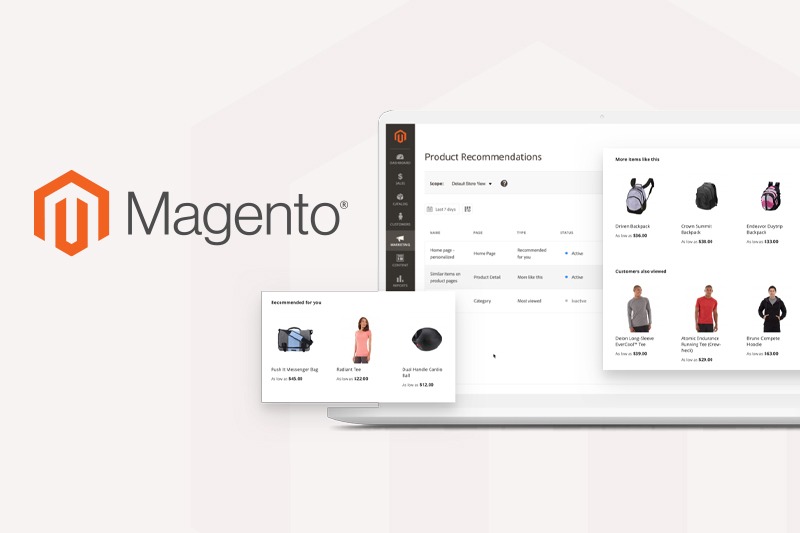
- AI-powered product recommendations — Magento 2.4.8 introduced AI-driven merchandising for different buyer types, personalising the catalogue experience for each company account
- Adobe Target — for A/B testing and personalisation at scale